Production
Custom vs modular exhibition stands in Europe: compare the whole programme
A practical custom-versus-modular stand comparison covering finish, reuse, rental, logistics, future footprints and total programme cost.
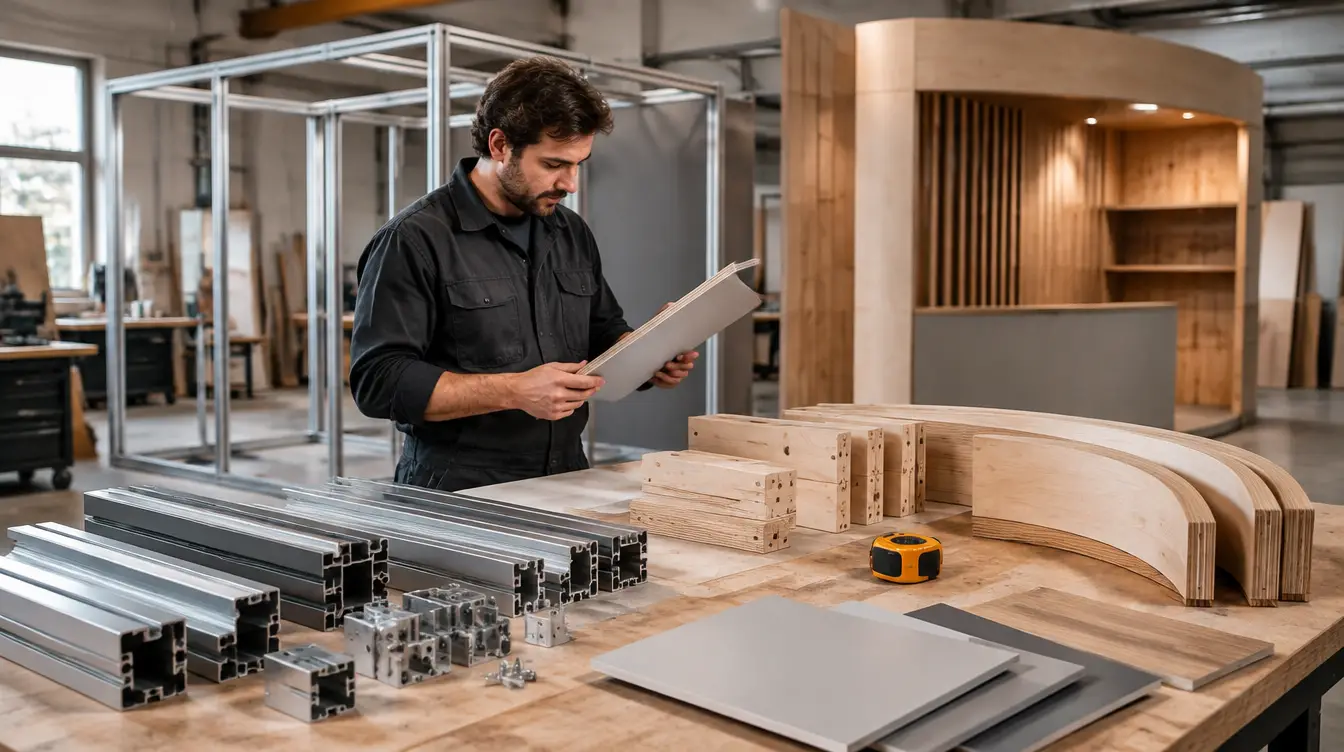
Define the construction model before judging the appearance
Custom construction is made to a project-specific design; modular construction uses a repeatable system of components. Either can be purchased or rented in different arrangements, so ownership is a separate question. A modular stand may include custom counters and graphics, while a custom-looking stand may conceal a reusable frame. Ask the supplier to describe the proposed bill of materials rather than relying on a category label.
Start with the stand's function. A complex product installation, unusual geometry or carefully controlled material detail may justify bespoke work. A programme with changing footprints may benefit from system components that can be reconfigured. Neither model is automatically higher quality. The specification, tolerances, surface condition and installation team determine the finished result.
Compare what visitors see and what crews must assemble
Identify the visible surfaces that carry the brand experience: reception, product displays, meeting areas and graphics. Review samples and joint details at the distance visitors will actually see them. Then ask how the supporting structure is assembled, how services are concealed and how damaged parts can be replaced. A convincing visual does not reveal the installation effort behind it.
For modular proposals, request the system dimensions, finish options and any limits on openings or integrated fixtures. For custom proposals, ask which components can be packed, repaired or adapted rather than rebuilt. A hybrid specification should identify the interface between the system and custom components so separate suppliers do not assume the other party will solve the fit.
Calculate the cost over the shows you genuinely expect to attend
Build a programme comparison with acquisition or rental, each installation and dismantling, transport, handling, storage, repairs, new graphics and final return or disposal. Use confirmed event plans where possible. Do not justify a higher initial investment with hypothetical future shows that have no approved budget. Include the cost of adapting the stand to different footprints and open sides.
A fictional example illustrates the method, not market pricing: option A costs €18,000 initially and €7,000 for each of two later shows, totalling €32,000. Option B costs €24,000 initially and €3,000 for each later show, totalling €30,000. If B also needs €4,000 more in storage and adaptation across the programme, its total becomes €34,000. The apparent saving reverses when the missing scope is included.
Make reuse a documented operation
Ask for packed dimensions, an inventory, assembly instructions and a condition-report process. Identify who owns the components, where they will be stored and how missing parts are replaced. Graphics may need replacement even when frames are reusable. A return shipment without an inventory can turn the next installation into a search for parts that were never packed.
Avoid claiming environmental superiority from the word modular alone. Reuse can reduce repeated fabrication, but the actual result depends on materials, transport, repair, storage and how many times the components are used. Ask for specific evidence instead of a blanket green claim. Choose the design and ownership model that the client can realistically maintain.
Related planning guides
Use the venue guide for technical preparation, the cost guide for commercial comparison and the logistics guide for delivery handoffs.
Compare European booth contractors, local builders and managed white-label delivery with a practical scope and supplier-evidence checklist.
↗European exhibition logistics: from packed inventory to return shipmentPlan exhibition freight in Europe with delivery access, handling ownership, installation sequencing, empty-case storage and a controlled return journey.
↗European exhibition stand cost guideCost categories, a clearly labelled fictional budget and quotation comparison.
↗All European exhibition guidesExplore the English-language planning library by destination and task.
↗Frequently asked questions
Questions agencies ask
Is modular always cheaper than custom?
No. Compare the actual specification and full programme costs. Rentals, adaptation, freight, storage and the number of confirmed uses can change the result.
Can a modular stand look distinctive?
Yes, through layout, graphics, lighting and selected custom elements. Review the proposed system's constraints and finish samples before approving the visual.
Should we buy a stand for one show?
Compare purchase and rental on the complete scope, including return or disposal. Ownership alone offers little value if there is no credible plan for reuse.
BuildAcross
Turn your plan into a comparable delivery brief.
Send the event, venue, dates, allocated stand plan and current design. We can review the scope and assess a project-specific European delivery route. Availability and terms require confirmation.
Send your project for review